Understanding the Value of a Community Library

By Charlotte R. and Willy Bukenya

The St. Nicholas Community Library is poised to become a vital resource for our local Ugandan community, offering access to knowledge and opportunities for all. With over 2,000 children, 1,000 adults, 16 primary schools, 3 secondary schools, and a local community of 250,000 people, the impact of this project is significant.

Our local community is very supportive of this project, “My name is Richard Ssengoba, local council chairman of Ddongwa village where St. Nicholas Community Library is located. In all my life, I have never seen a community library in the region, it’s the first of this nature. We are excited to host it, many children and youth struggle to find good books for reading, books are only in urban schools. St. Nicholas Community Library will serve our rural communities. We are glad for Wonderland BookSavers and Book Fairies support to see our dream happening. We pray that it is completed such that the children can read, get knowledge and improve on the English fluency in our education curriculum.”

Current Status of Library Project

We are collecting books from through out our community. Wonderland BookSavers has previously donated books. Book Fairies UK has recently sent us 396 books. Our library, pictured above, is 60% complete. We are currently working on completion of toilets, water well and water tanks, gate, perimeter wall, urinals, reading share area and tree planting.

Book Fairies UK has contributed partial funding for all manufactured building materials, a total of UK pounds 2,670.

We are lacking key library supplies that include: furniture (bookshelves, tables, chairs), solar power, as the area has no hydro power, technological tools: computers and printers.

Kyamaganda Community Development Organization and all local communities have contributed 12,000 bricks, 20 truckloads of sand, food for workers, and supplied unskilled workers and project supervision. This contribution is valued at UK pounds, 3,517.

Addressing Challenges Head-On

As with any ambitious project, we have encountered some challenges along the way. However, we are committed to overcoming these obstacles to ensure that the library becomes a reality for our community. Here are some of the key challenges we are facing and the strategies we are employing to address them:

Infrastructure: The muddy compound is a significant challenge to the usability of the library. We recognize the importance of providing a conducive environment for users, which is why we are working to cement the compound to enhance accessibility and safety. We have mobilized the community to continue contributing locally available materials, such as sand and bricks. Construction of an adjacent 3-room staff house for library workers will enable librarians to reside at the library, providing professional assistance and support for library users.

Painting: Inadequate funds have delayed the painting of the library building. We are seeking additional support to complete this essential aspect of the project, which will protect the structure from wear and tear.

Female Urinal: The construction of the female urinal is only 40% complete. We understand the importance of providing adequate facilities for all users and are prioritizing the completion of this crucial aspect of the project.

Reading Shade: A permanent roof is needed to protect library users, and books, from the elements. We aim to construct a reading shade with a permanent roof to ensure the safety and comfort of users, especially during inclement weather, additionally protecting library property during the rainy season.

Lighting: The area has no hydro power, solar installation for light and electricity is key. This will provide power for electronics and light and security at night for both librarians and users.

Furniture: We welcome contributions toward supplies, chairs, tables, book shelves, laptops, and of course BOOKS.

We Request Your Support

Despite our great progress, we still need additional funding to complete the St. Nicholas Community Library. We have mobilized the community to contribute locally available materials, but additional funding of US $8,237 is needed to complete infrastructure improvements, facility enhancements and book purchasing.

We are almost there! Please join our effort to support literacy in the Kyamaganda community!

KCDO Supports Students with Scholarship Funds

KCDO, in partnership with US-Africa Children’s Fellowship, and Wonderland BookSavers, has enabled children to continue their education in 2022.

Water Harvesting Barrels Distributed by KCDO

Willy, KCDO Director reports, “Christian greetings! Am happy to inform you today we are making market survey for water tanks and water drums from hardware shops in the city. This will enable us to get the quotations and compare prices such that by the time we have funds we procure and pay off.  It’s so rainy currently and is a good time for water harvesting.” (Rainy season)

“We have been able to identify the water harvesting facilities supplier. We have selected also the households to be supported but those with old caretakers who have 70+years and with more than 3 children in the household.”

 “The water harvesting procured for 20 households. Each can store 450 litres of water.”

Procurement of these water barrels was accomplished in partnership with Wonderland BookSavers and USA Interns.

The importance of this accomplishment can be seen in the attending officials who presided at the distribution of the water barrels.

Willy stated, “Children and caretakers receiving water harvesting facilities and the function was officiated by Assistant Health Officer, District Water Officer and Assistant District Governor”

Growing Food for Vulnerable Children

In February 2021, KCDO appealed to WBS about the need to procure a plot of land which was adjacent to the piggery project that was on sale. KCDO currently has 35 children on ART (ARVs) under our care at the centre. The main challenge was lack of food and malnutrition challenge that cause non suppression and timely sickness.

Through A miracle, we sold some pigs to raise local contribution and Wonderland BookSavers contributed a bigger percentage to raise the 70% first installment that was needed. We paid off and we immediately set nursery bed for cabbage, maize, and soya peas with active involvement of children themselves, Director and the mother who cares for the children.

Water was a challenge and we had strong rosary in which we eventually received rainfall. We transferred the seedling from nursery bed to garden as photos indicate. We used the pigs’ dung to fertilize the garden and we expect the following.

Expectations.

  • If all goes well, the garden will yield:-
  • 6bags of maize each with 100kgs valued at $85.
  • 2000 cabbages from the harvest costed at $285.
  • 10 baskets of carrots with a value of $57.
  • 10 bags of Green paper with value of $171
  • 300kgs of soya peas   $153.

Once the harvest period is ready in July, the following challenges will be overcome.

  • The cost of buying food will be reduced by 85%.
  • The nutrition of vulnerable children will be boasted and their health immunity improved.
  • The children and Kcdo benefiacries will acquire modern skills of farming which can be passed over to other households.
  • The garden serves as adomostration site for the community and this can be replicated to other surrounding villages.

Challenges.

The need to have KCDO spray pump and enough fertilizers through adding on number of pigs and a cow project for cow dung supply and milk supply too.

2020: Year in Review in Photos

Household in Nakateete Village receiving mosquito nets donated by Peace Corps Uganda
Kinoni Town Council Community Development (CDC) officer meeting Child Protection Club at Kinoni Integrated Secondary School
KCDO supporting households in Kinoni T/C, Kisekka S/C and Ndagwe S/C with kitchen gardening supplies
KCDO staff and social worker Mr. Muyanja Sam distributing farm implements
KCDO field officer Mr. Wadidi Jackson attending to Village Savings and Loan Association )VSLA) group in Kikenene Parish, Kisekka sub-county
Peace Corps volunteer from USA, Iman Morgan, teaching women’s group on the making of liquid soap
Tool kits given to apprentices who successfully completed their courses
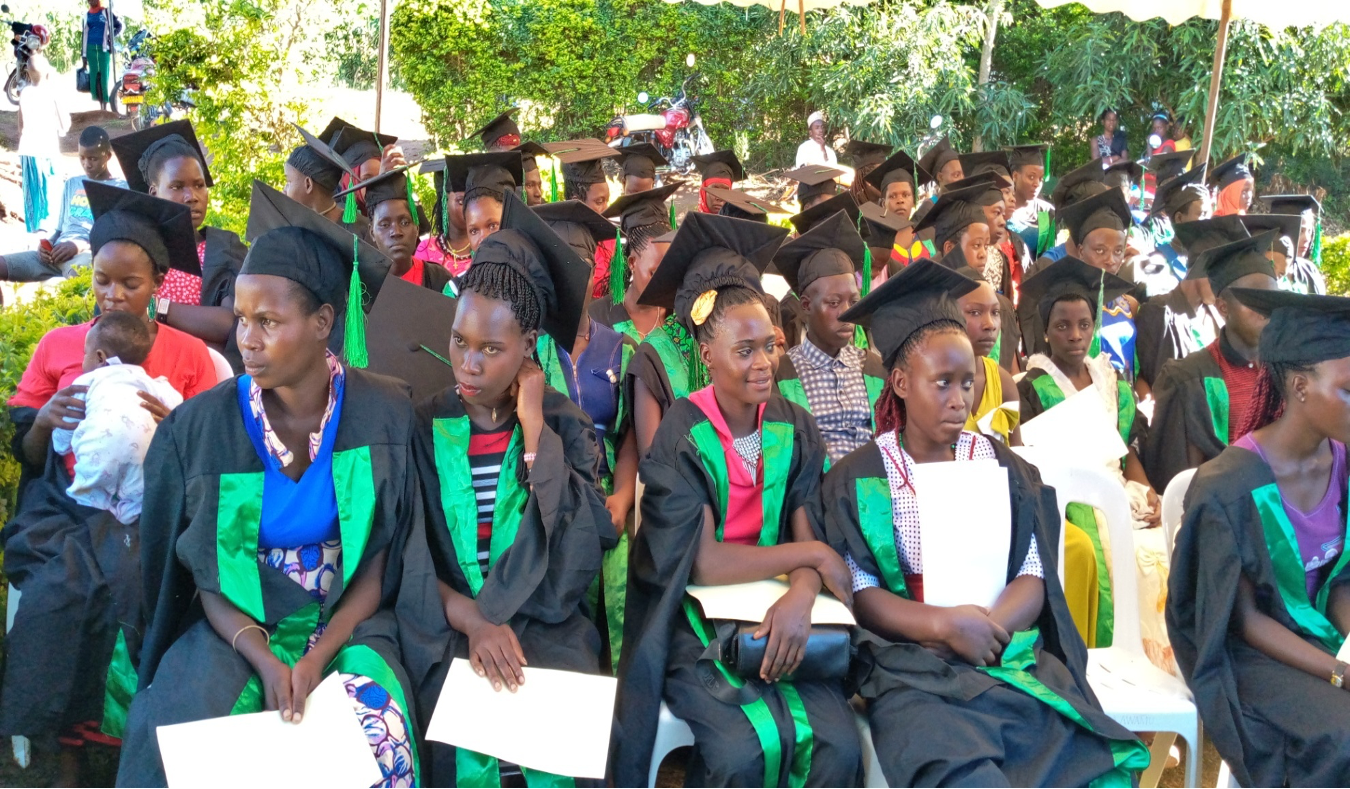
Graduation ceremony of apprentices successfully completing their coursework
OVC receiving scholastic materials packages through KCDO educational support program
Household that received IGA from KCDO, progressing well
Some of the OVC children receiving clothes donated by USACF and Wonderland BookSavers (USA), Kisekka sub-county
Some OVC and trainers participating in start-up business skills training, organized by KCDO and Peace Corps volunteer Iman Morgan
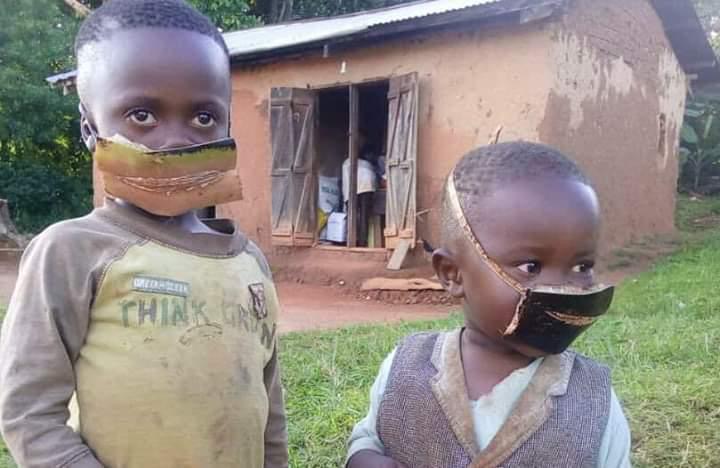
Hand washing material donated by Giz to KCDO to support Covid-19 hand washing, Director Bukenya Willy and Father Vincent receiving items
In response to Covid-19, KCDO, with support from Giz, conducted radio talk shows for sensitization on risks and preventative measures of Covid-19
KCDO staff, Mr. Lubambula Max and social worker conduct home visits
Community members receive IGSa and booster grants from KCDO
Agricultural officer demonstrating kitchen gardening techniques
KCDO staff, Mr. Ndaula Jude distributing food to community members during Covid-19 lockdown
KCDO Chairman of the Board, Reverend father Vincent Kateregga with KCDO staff and volunteers
KCDO Board and staff members reviewing KCDO financial policy
Apprentices learning trades
OVC supported with sports equipment and trained in soccer
KCDO piggery project
KCDO Library enhances research capabilities within the community
School teachers and students in ICT training
OVC receive solar water purifiers from KCDO
KCDO staff participating in weekly staff meeting
OVC and caregivers participating in Positive Parenting session
KCDO distributes Covid-19 protection face shields to essential workers and field staff

Water Purifiers Success Story

Compiled by Wakimwere Arnold, KCDO field officer

Introduction

During our home visit in the household, we found out that most of our clients get water from different sources like boreholes, harvesting it from rain, wells, streams, ponds among others. Through the assessment done by the staffs Kyamaganda Community  Development Organization(KCDO),  most of the households in sub-county of Kisekka access water for drinking from streams and ponds   which expose  them to taking contaminated water thus likely to be exposed to water born diseases like  typhoid fever, is well-known in extremely poor parts of developing nations; it’s estimated that up to 20 million people worldwide suffer from the illness each year. It’s spread through contaminated food, unsafe water, and poor sanitation, and it is highly contagious, Cholera which is commonly found in humanitarian emergencies or marginalized villages where poverty and poor sanitation are rampant. The disease is spread through contaminated water and causes severe dehydration and diarrhea. Cholera can be fatal within days or even hours of exposure to the bacteria, but only 1 in 10 people will develop life-threatening symptoms, dysentery also a waterborne disease characterized by severe diarrhea as well as blood or mucus in the stool. It can be caused by bacteria, viruses, or parasites in unsafe food and water, Hepatitis A is a liver infection caused by consuming contaminated food and water, rural communities with poor sanitation and hygiene management are most exposed to the disease.

Photo below shows children fetching water in a stream in kisekka sub – county

Following the observation in the introduction above, with support from USA-KCDO Partners Kyamaganda Community Development Organization (KCDO) implemented Health Systems Strengthening Project in two sub-county Kisekka sub – county and Kinoni Town Council targeting households infected and affected by HIV/AIDS and other vulnerable Status. This was achieved through working with different stake holds I.e health centers, Village Health Teams(VHTs) Community Development Officers(CDOs)Local Council Leaders (LCs) Para-Social Workers(PSWs) and Volunteers  that deliver comprehensive services of Health and treatments to affected and infected households by HIV/AIDS and other Economic empowerment and Water and Sanitation to different vulnerable people in the community.

A total number of 100 household were reached and received solar bag for domestic use.

KCDO staff demonstrating how to use solar bag.   KCDO staff handing over solar bag to a client

ACHIEVEMENT:

Since these Solar Bag is a sunlight-activated reusable water purifier that destroys or reduces the broadest range of contaminants without pumping, electricity, chemicals or replaceable components. This has reduced the spread of various water born diseases as the members are able to purify water to kill all the germs and  Chemical Contaminants like;  Pesticides,  Herbicides, Insecticides,  Cleaning Solvents,  Petrochemicals,  Pharmaceuticals,  Pathogens- Bacteria,  Viruses,  Protozoa  before drinking through simply placing the Solar Bag in the sun for a few hours, and enjoy purified water. 

While caring out a follow up and monitoring on the usage of this purifiers in the community and household being supplied with the water solar bags, we observed that these water solar bags have helped the individuals so much, in the way that individuals use this solar bags on the daily basis to purify water for drinking, they extended their sincere appreciation to kcdo and our partners at large for bringing up such a wonderful idea of protecting and living a health life. One of the household of lutaaya jamewo upon reaching there on the ground, we found children happily looking on as the solar bag full of water placed on the Jeri can.

KCDO staff conducting a follow up in kyasonko village kisekka sub- county

KCDO staff and a child from the home study taking water purified using a solar bag.

Conclusion

The needs of OVC or otherwise made vulnerable by HIV/AIDS are cross cutting as many of them dramatically escalates from economic, health and household social issues. It would be necessary for KCDO and partners to jointly continue to work with local families, communities, and other organizations in a similar setting to focus their program and policy development efforts on ensuring the survival of these OVC households in breaking the cycle of poverty, despair, in regard this can make positive and measurable contributions to the improved health, safety, and happiness of the HIV+ (OVC) in the most appropriate environments for their development. We extend our warmly appreciation to our partner who donated us the purifiers to improve on the life of the people in rural based communities of kisekka and kinoni and ready to continue working with them in any way, God bless.

Compiled by Wakimwere Arnold